

Blog
Blog

Search marketeer
Published
30 October 2026
Reading time
10 min read
Even Google admitted it: 40% of Gen Z would rather use TikTok or Instagram than Google to look something up. That's a completely different way of searching and of trusting information. TikTok in particular carries risks, because the app is notorious for the amount of disinformation doing the rounds. So for news and factual information, TikTok is not a reliable source. Even so, TikTok and Instagram can be surprisingly handy search engines. On this page, you'll read why, and exactly how young people use them.
Searching on TikTok or Instagram works very differently from searching on Google. Not only do the platforms generally contain a different kind of information from what you find in Google, the way information is presented is also considerably different. On TikTok and Instagram, you search visually and you search through content from individual users. Both aspects make for a different way of searching than you're used to in Google.
Because you search visually, the type of information you look for on TikTok and Instagram is often different from what you look for in Google. Whereas in Google you mainly ask questions and look for background information on topics, on TikTok and Instagram you're more likely to be looking for visual content around things like recipes, life hacks, restaurant tips and travel experiences. TikTok and Instagram revolve around lifestyle, so the type of content you find there is often related to it. The visual aspect matters for this kind of content too.
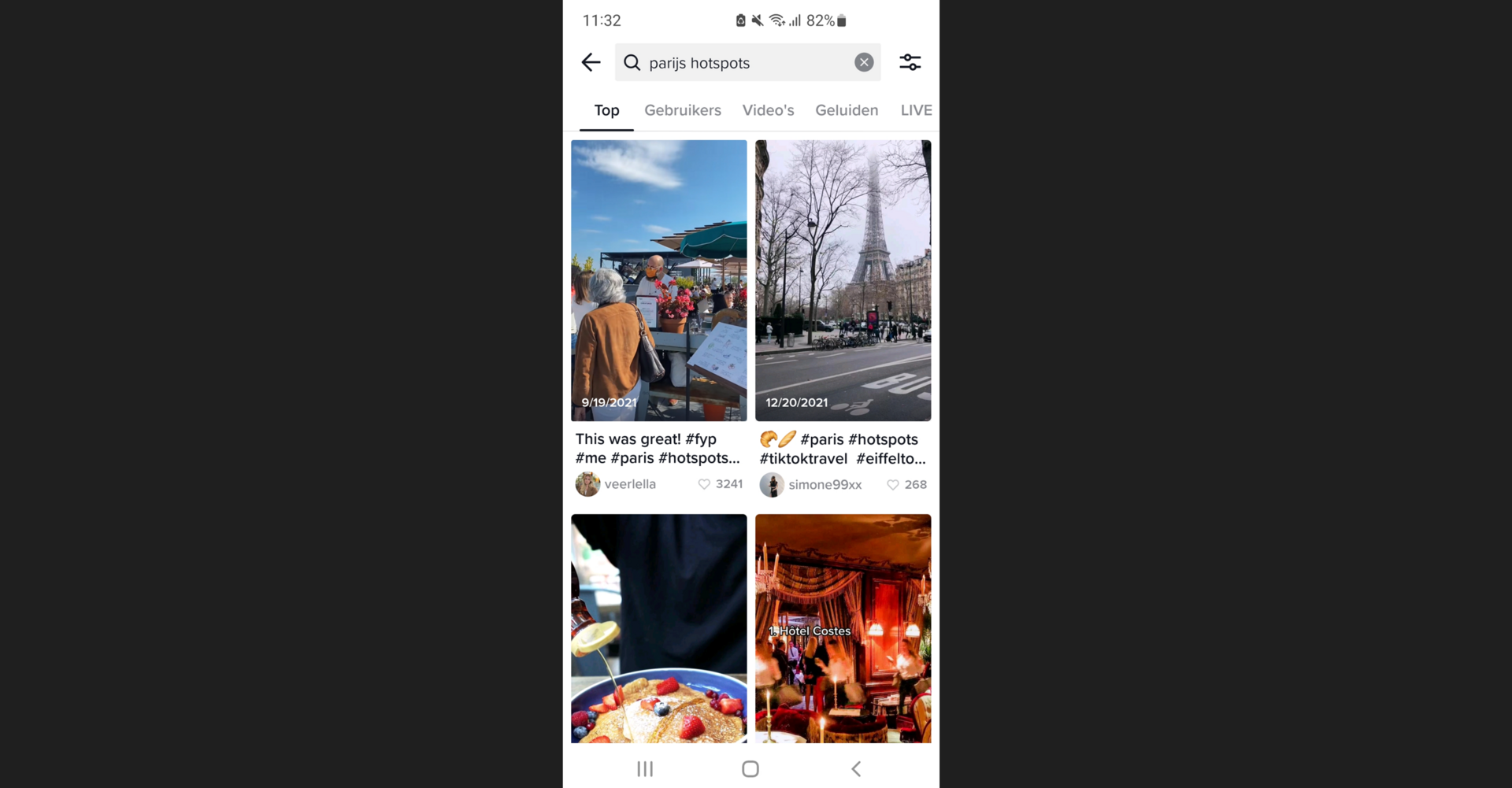
If you're looking for a recipe, for example, you probably want to see what the end result looks like and which steps you need to take along the way. The visual aspect is also important for travel-related content. If you're going to Paris, for example, a TikTok can quickly show you the best highlights and where the food looks most delicious. So it's no surprise that the new generation uses TikTok and Instagram as a search engine.
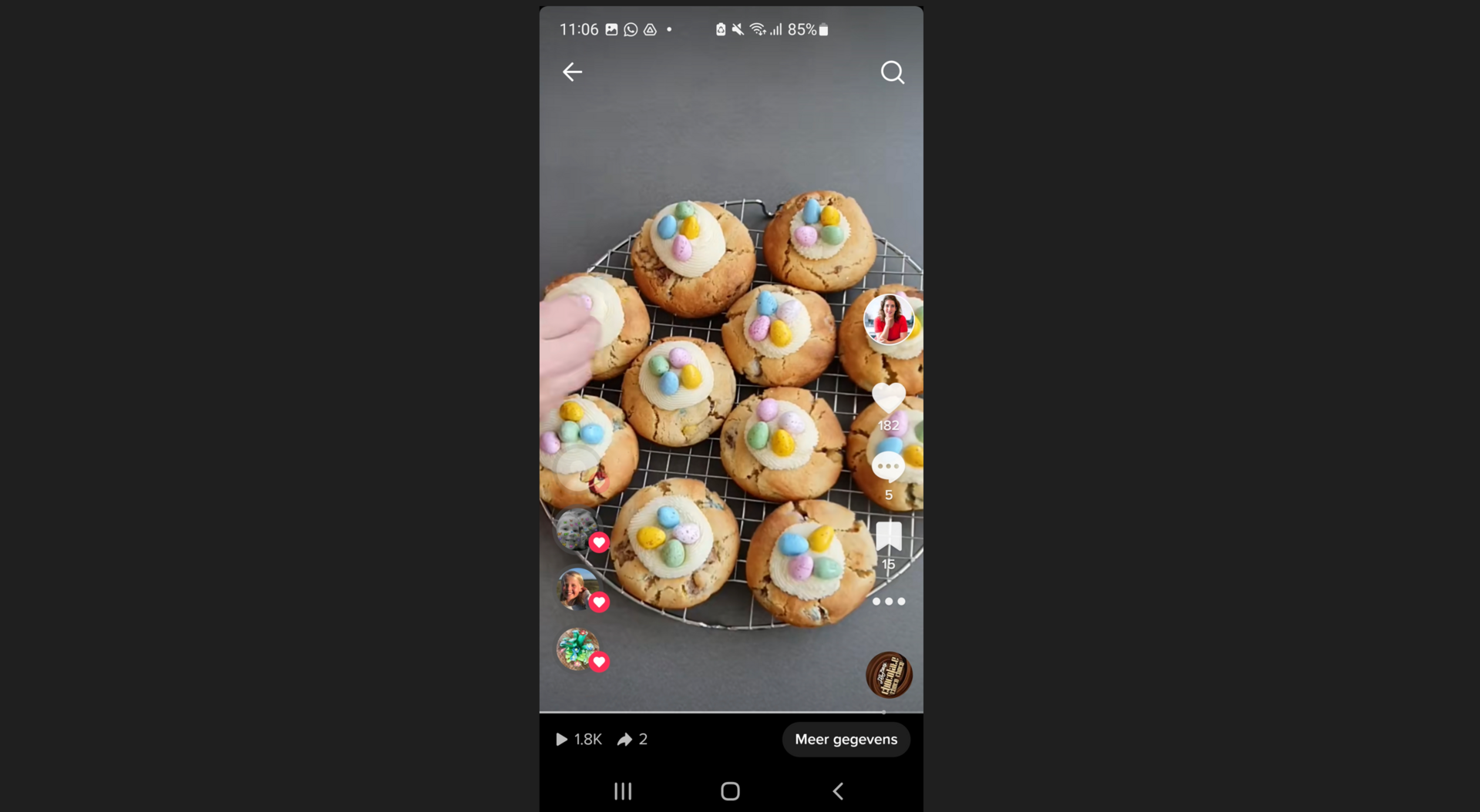
Not only do we want to see more visual content, these days we also value the opinions and recommendations of individuals more than the recommendations of Google or other big companies. This isn't a recent thing. If you're looking for a good plasterer, for example, chances are you'll ask the people around you for tips before you google one. The same probably goes for restaurant and travel tips. And since we also see our social media contacts more as friends than we see Google, it's no surprise that these days we take more from the people we follow than from search giant Google.
However, this does mean we rely on the opinion or view of one person. And that's exactly what can be dangerous when it comes to news-related content, political positions or information during a pandemic or election, for example. When searching on TikTok and Instagram, it's important to verify this kind of content with different sources, so you know the information is correct.
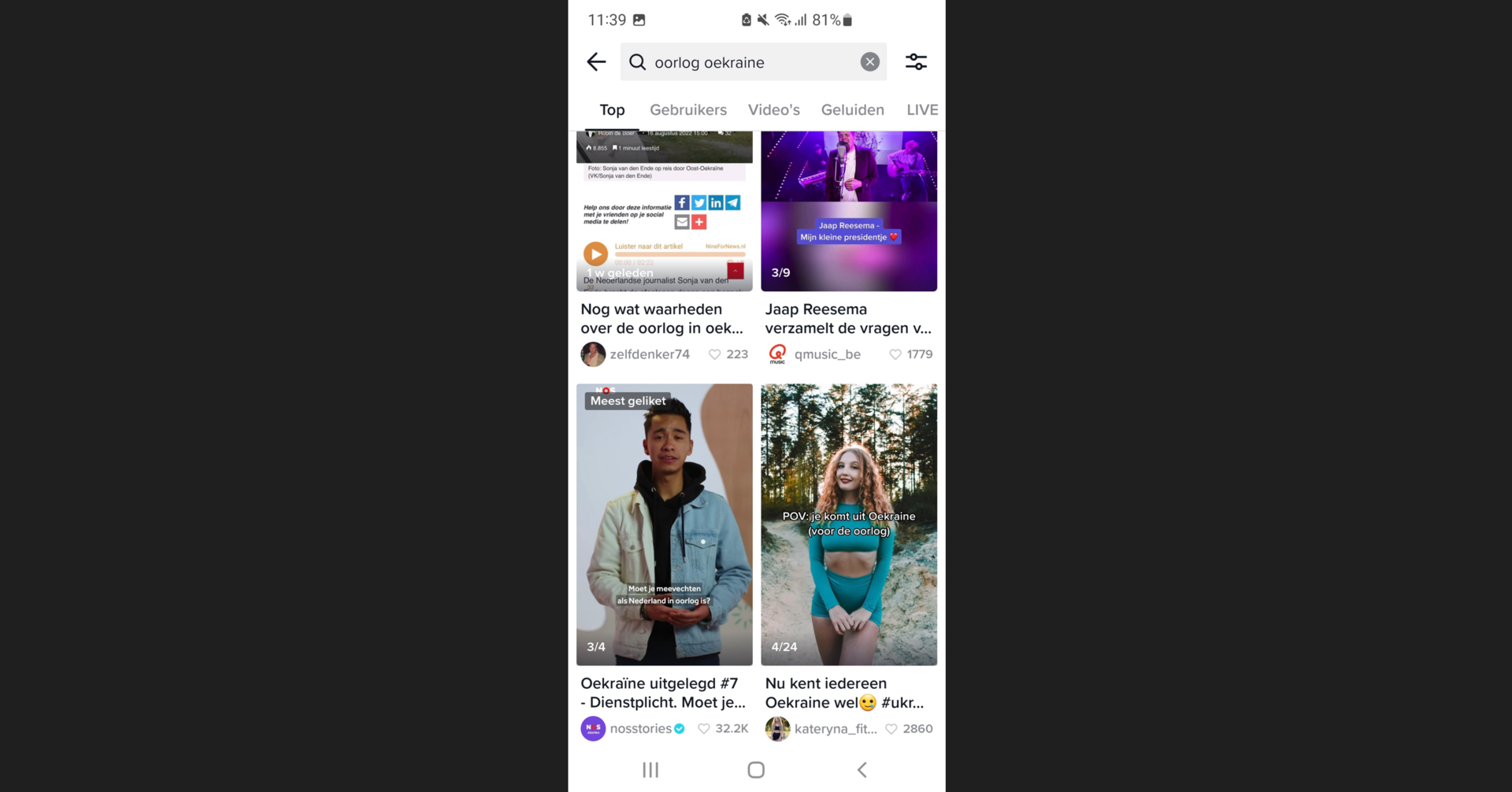
The more visual content is used, the harder it is to detect disinformation. For written content, various software is available to detect disinformation, but it doesn't work for video content. With the growing number of users on TikTok and Instagram, that's a big problem. Meta and TikTok have said they want to tackle disinformation firmly. But how are they going to deal with the glut of disinformation?
Because the widely used fact-checking software doesn't work well for video content, both TikTok and Instagram fight disinformation in collaboration with fact-checkers and fact-checking agencies. This means some of the content that may contain disinformation will be assessed by real people. This takes a lot of time, which is why videos that haven't been checked yet aren't visible in the 'For You' or 'Explore' section. These videos only become visible once they've been verified. Videos that can't be verified are given a warning label in the hope that such posts won't be shared further.
TikTok has also decided to ban advertising around political positions. Influencers, however, look for creative loopholes that still let them post sponsored political messages. Not for payment, but for a different kind of compensation. This plays a role especially around the elections in the United States, where disinformation is a big problem.
Instagram is also working with fact-checkers. It uses fact-checking software similar to TikTok's, which is less suited to the increasingly popular video content on Instagram. So here too, fact-checkers are brought in. Instagram also labels content containing disinformation, in the hope that it won't be seen as the truth and won't be shared further.
To limit political disinformation around important elections, Instagram pauses the option to run political ads at these times, such as around the elections in the United States.
Now that you know the social media platforms TikTok and Instagram are increasingly being used as search engines, you'll also want to know how best to optimise for them. After all, you want your content to be found in these search engines too. Fortunately, this doesn't work very differently from optimising for Google. Every search engine basically works the same way. On TikTok and Instagram, too, it's important for your content to match the searcher's search intent as closely as possible.
Before you start rolling out your SEO strategy for TikTok and Instagram, it's good to know that since 2020 Google has also been able to index TikTok and Instagram content. So you're not only optimising for TikTok and Instagram themselves, you're also optimising your social media content for the search results in Google. That makes you easier to find on several platforms!
Before you start optimising for TikTok and Instagram, it's important to ask yourself whether your content and the questions you address are suited to these platforms. At the moment, TikTok and Instagram are mainly used as search engines for recipes, travel tips, restaurant tips, fashion trends, culture and life hacks.
Like any good SEO strategy, your SEO strategy for TikTok and Instagram starts with keyword research. That keyword research works differently from keyword research for Google, though. On TikTok and Instagram, you'll mostly be optimising for hashtags. One drawback of hashtags is that they're always short-tail keywords. They often consist of 1 word, but sometimes 2 (or more) words written together. On top of that, people on TikTok are more often looking for short, snackable content rather than a longer answer, which is what Google is used for more. That also means you'll be dealing with short-tail search terms rather than long-tail ones.
To find out which hashtags are widely used around your content, you can search on TikTok and Instagram yourself. Both platforms proactively give you search suggestions based on the term you type in. They also show how often a hashtag is used. Frequently used hashtags are popular, so we assume they're also searched for a lot. There are also various external platforms where you can find the most popular hashtags.
Found the most promising hashtags? Then you can start creating content for TikTok or Instagram and optimise it for the hashtags you've selected. Make sure your content actually matches the hashtags. If you use hashtags that aren't related to your content, it won't work.
Do bear in mind that TikTok's and Instagram's algorithms aren't the same. On TikTok, for example, it's easier to reach a larger audience even if you only have a few followers. On Instagram, you only reach a larger audience once you have a lot of followers. So you could probably expect results sooner on TikTok than on Instagram.
Have you only just started with online marketing and SEO for TikTok and Instagram? Then it's wise to focus on the slightly less popular hashtags at first. The audience is smaller, but that gives you a better chance of being found quickly. On the more popular hashtags (more than several thousand views), competition is fierce. So do some research in your niche and select keywords, or hashtags, that people do search for, where the number of views isn't at its maximum but is more than a few hundred. That may sound a bit vague, but I'd rather not give you numbers, because they can differ per niche.
Once you've found suitable keywords, you can also use them to optimise the text in your video (overlays) and in your descriptions. If you match the text to the keywords your target audience uses, you increase your chances of being found for those keywords. Just like SEO for Google, in other words.
The better your content catches on, the more engagement it gets and the better it's found! That's why it's important to create engaging content. So make content that resonates with your target audience and followers. Ideally, you want people to interact with your content as well by liking it, commenting on it or sharing it. So choose topics that appeal to your target audience. Also use trending hashtags and popular music to ride the latest trends.
You can also encourage engagement by asking your followers a question. You can do this in different ways, for example by asking your followers when they're going to make your recipe or put your travel tips into practice. You can also have them guess or vote on a new product that's launching soon. Plenty of options!
Generating reach on TikTok and Instagram? That's great, but it doesn't stop there. Ideally, you want to draw these people to your website. Fortunately, both TikTok and Instagram offer various ways to do that. Test which method generates the most clicks for your brand. Is it pointing to the link in your bio? Including links in your Instagram stories, or mentioning your website in your TikTok video? Where possible, combine different methods to get as many TikTok and Instagram followers as possible to your website.
Just posting new content regularly on Instagram and TikTok isn't enough. To know what catches on and what works less well, it's important to keep an eye on the statistics. With business profiles on both Instagram and TikTok, it's easy to see which videos perform best and which have the biggest reach. You can also see which videos are found most often in Instagram's 'Explore' and on TikTok's 'For You' page. By carefully analysing which content scores, you can keep optimising your new content further and further.
Above all, analyse moments when you see things that deviate from the trend, for example:
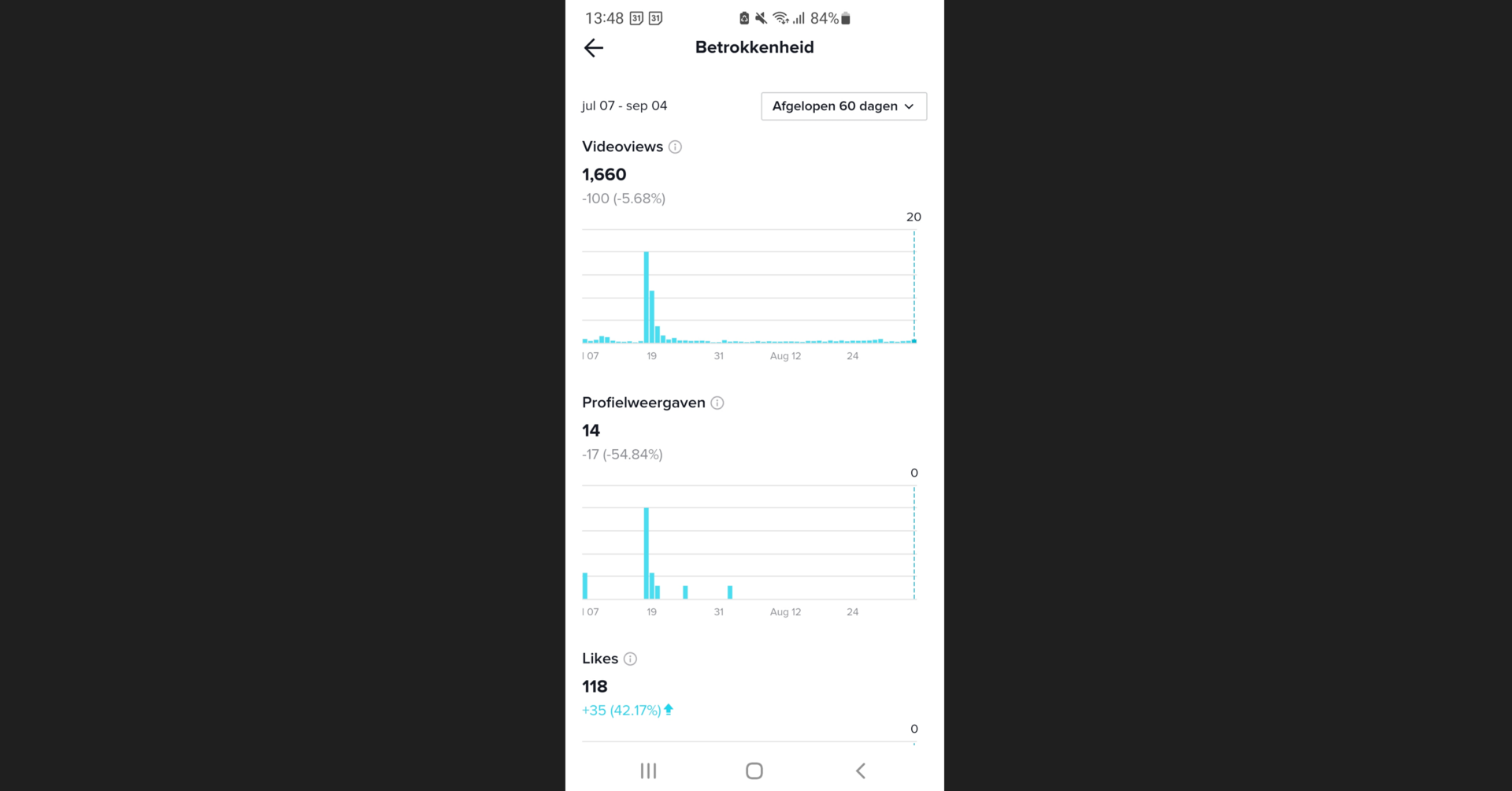
It's then important to find out where these deviations come from and which content is responsible for them. Once you know which content performs well, you can check which characteristics of that content may have led to these peaks. Then you try to work out how to use these learnings in other posts. That way, you keep improving and growing your reach.
TikTok is sensitive to viral and trendy content. It's relatively easy to go viral on TikTok. When something goes viral, others often pick it up quickly. Think of the baked feta pasta, fried pasta or the Jerusalema dance.
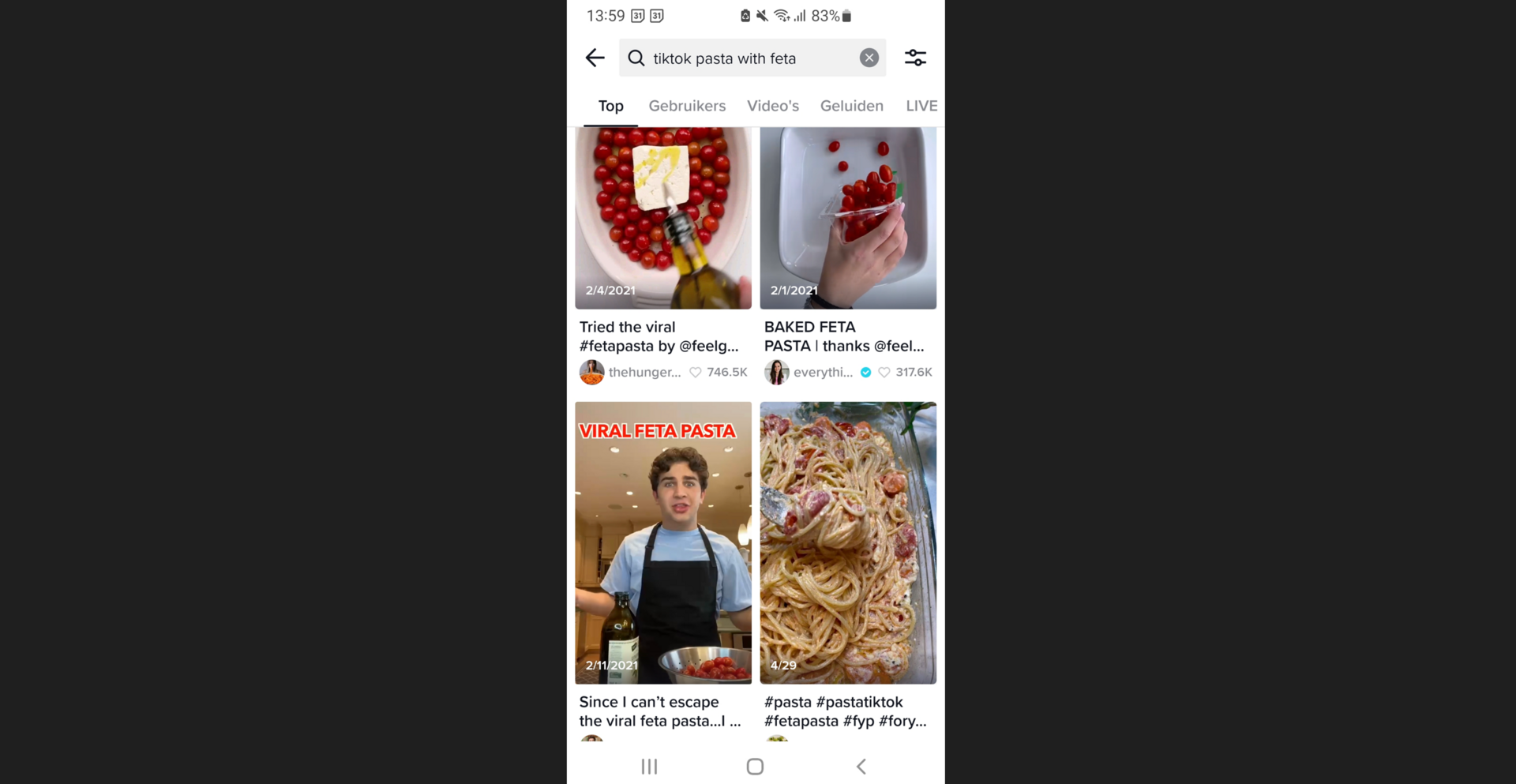
Ideally, you'd go viral with your own content, but that isn't so easy. It's quicker to pick up viral content yourself. So follow the trends in your niche closely, so you can quickly jump on viral content when it's relevant to you. Try to take elements from viral content that you can apply to your own. Who knows, you might go viral yourself soon!
We are a B2B marketing agency in Eindhoven. We make sure B2B companies land on the shortlist of their ideal customers, especially in complex buying processes where others get stuck. We combine branding and demand generation so you become a brand in demand. Instead of just chasing leads, we build a brand that is seen, trusted and chosen.