
Case
Blog

Founder, Business strategy
Published
30 October 2026
Reading time
14 min read
In the B2B market, brands, products and services increasingly resemble each other. Decision-makers notice this when they compare suppliers. Features overlap. Websites say the same thing. Sales presentations look like ones you've seen before. That's exactly why B2B buyers look for characteristics that help them decide who is reliable, knowledgeable and distinctive, so they can stand behind their choice of the best supplier. That foothold doesn't come only from a good product, but above all from a brand that shows a clear personality. A brand that is recognisable and inspires trust, even before anyone makes an enquiry.
That's exactly where Jung's archetypes come in. These archetypes give organisations direction in shaping brand behaviour, style, story and communication. They make a brand more human and easier to understand, even in markets where decisions seem rational but are ultimately often influenced by trust. In this article, you'll read how to apply the 12 archetypes within your B2B brand strategy. You'll also read what these archetypes mean for your communication, your positioning and the way you become visible to your ideal customers.
Archetypes are recurring personality patterns that people recognise instantly, without consciously analysing them. They form a kind of frame of reference that helps us make sense of behaviour. That works not only for individuals, but also for organisations. A brand that behaves like a rebel feels different from a brand that behaves like a protector. You notice those differences straight away, even if you can't immediately put your finger on them. A well-chosen archetype forms the basis of how a brand communicates and how decision-makers experience your brand.
For B2B brands, archetypes serve an important function. In a market with long buying cycles, multiple stakeholders and often complex products, a clear archetype helps build trust faster. A well-chosen archetype makes a brand predictable and recognisable. It gives direction to tone of voice, visual style, campaigns and content. It determines how employees talk and how sales tells the story. It helps show what you stand for as an organisation and how you look at the market.
In short: an archetype gives a brand character. And character is often the difference between being noticed and disappearing into a long list of similar providers.
An archetype isn't just a tool for giving your brand personality. Above all, it's a strategic instrument that helps you become visible and recognisable in markets where customers observe for a long time before they actively get in touch. In a demand generation approach, that's an important element. A clear archetype ensures decision-makers already know, understand and trust your organisation before they want to talk to a supplier. That increases the chance you'll land on their shortlist naturally, even before they start actively looking for a supplier.
An archetype only works if you apply it in both your strategy and your execution. It forms the basis for your story, your tone, your visual style and the way employees carry the brand. Especially in B2B, where many parties offer similar services, an archetype helps you take a clear position. It makes your communication recognisable and gives direction to everything you bring to the market.
In B2B, growth revolves around trust, clarity and a brand that matches your ideal customer's expectations. An archetype helps because it gives direction to how you communicate and how your organisation presents itself. As a result, customers understand more quickly who you are and what they can expect from you.
An archetype gives direction to how you look at the market and at your customers' challenges. That makes your POV more consistent and convincing, because it stems from one clear character.
Once you know which archetype you follow, a recognisable style in language, stories and visuals emerges naturally. That makes campaigns stronger and easier to develop, because everyone works from the same basis.
Your chosen archetype explains what you value as an organisation. This brings sales, marketing and management more closely into line. It gives the teams a shared direction.
B2B growth models show that brand recognition comes mainly from consistency. An archetype provides exactly that consistency. It creates a recognisable experience that sticks with decision-makers.
A strong brand makes the difference in markets where many providers are similar. When customers experience your brand as having a clear character and feeling familiar, they're more willing to choose you. This reduces price pressure and grows preference.
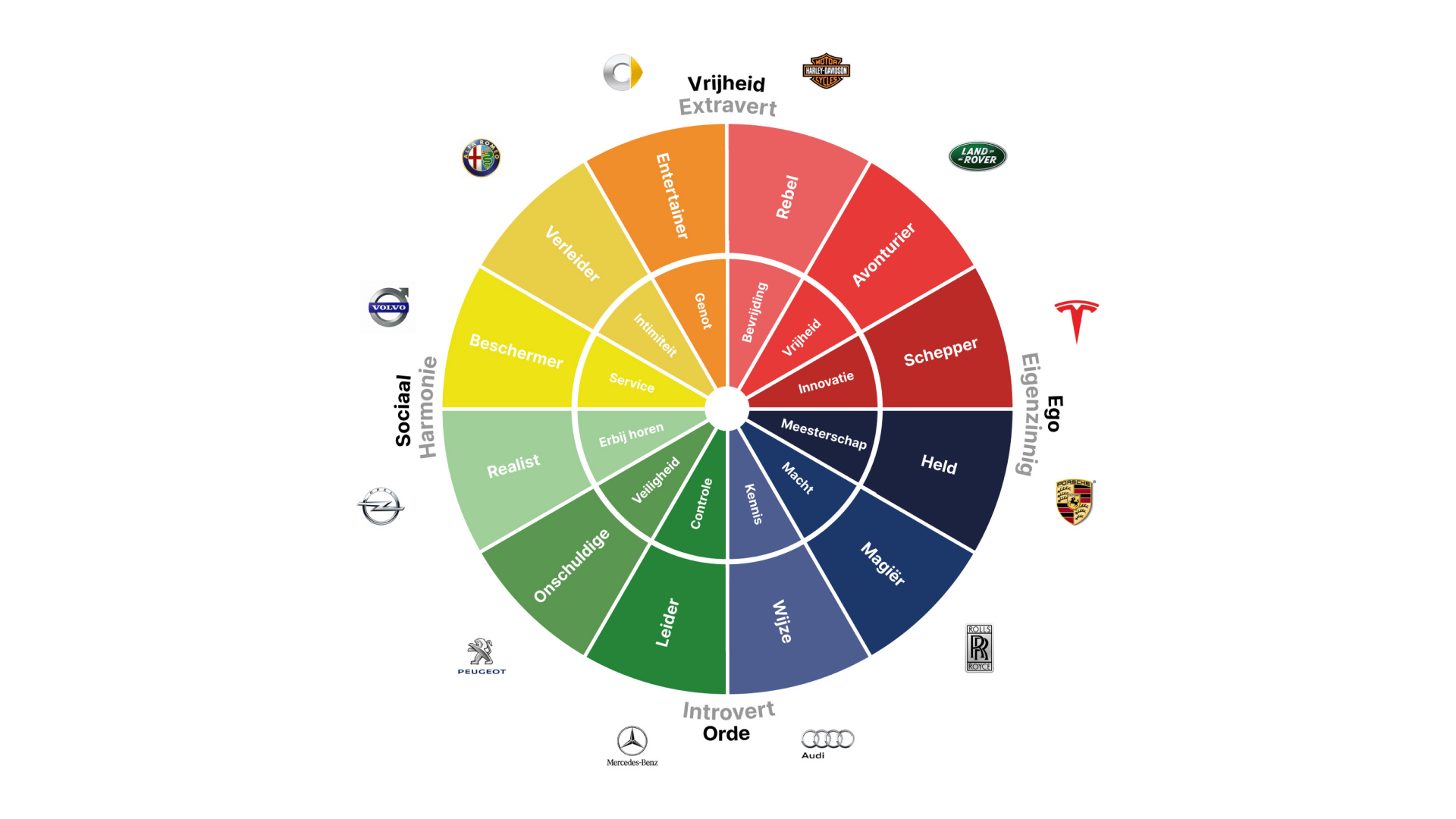
Each archetype gives direction to behaviour, language and choices. It helps you build a brand that is recognisable and matches your ideal customer's expectations. By choosing your archetype deliberately, you decide what character your organisation shows. The result is a brand that comes across more clearly and sticks better in markets where many providers look alike.
The Rebel represents organisations that challenge established patterns. They show that things can be done differently and dare to make sharp choices. This archetype suits companies that shake up markets with a new approach. Think of cybersecurity companies breaking with traditional ways of working, or innovative scale-ups replacing old processes with smarter automated alternatives.
A Rebel brand shows boldness and clarity. It communicates clearly and directly what it stands for, takes risks deliberately and makes it known that it sees change as an opportunity. Customers find a Rebel attractive when they themselves also feel things need to change.
Traits for B2B: outspoken, innovative, independent, contrarian, driven by change.
The Explorer focuses on autonomy, renewal and pushing boundaries. This archetype suits companies that discover, experiment and are open to new insights. For example, companies in R&D, engineering or innovative technologies.
An Explorer brand inspires customers to look ahead. It emphasises that growth comes when organisations make use of unknown possibilities. The brand shows that it is continually learning, exploring and adding new perspectives.
Traits for B2B: independent, inquisitive, curious, development-oriented, future-focused.
The Creator stands for companies that develop something valuable through ideas and craftsmanship. This archetype suits organisations that design products, build software or create technical solutions. They work from imagination and strive for quality.
A Creator brand emphasises creativity, expertise and precision. It shows that innovation comes from vision and perseverance. Customers experience a Creator brand as a partner that thinks along with them and finds original solutions to complex issues.
Traits for B2B: creative, precise, future-focused, inventive, tenacious.
The inspirer among the archetypes.
The Hero focuses on performance and responsibility. This archetype suits companies that value reliability and results. Organisations in logistics, industry, construction and manufacturing often use this archetype. It lets them show that they tackle challenges and help customers make progress.
A Hero brand radiates determination and expertise. It shows that it overcomes obstacles and stands for quality. Customers experience a Hero as a partner that has situations under control.
Traits for B2B: goal-oriented, reliable, performance-driven, steadfast, knowledgeable.
The Magician stands for organisations that make transformation possible. They bring new insights, new ways of working or a fresh view of familiar processes. Think of software companies, strategy agencies or companies that accelerate digitalisation.
A Magician brand helps customers fundamentally improve their organisation. It shows that change is not only achievable, but also creates value when it is guided in the right way. This archetype suits companies that connect vision with practical steps.
Traits for B2B: innovative, advisory, analytical, focused on improvement, persuasive.
The Sage represents knowledge, analysis and insight. This archetype is a good fit for consultancies, data-driven organisations and research institutes. The Sage brings clarity and makes complex situations simple. Customers seek out this archetype when they understand that a good decision starts with a clear picture of reality.
A Sage brand communicates clearly and with substance. It radiates calm and confidence. It helps decision-makers find the right direction based on facts and insight.
Traits for B2B: analytical, objective, careful, skilled, reflective.
The Ruler suits organisations that radiate stability and quality. They set the standard in their market. They offer reliability and oversight. Think of established software suppliers, manufacturers of critical components or companies that support large ecosystems.
A Ruler brand shows that it has a firm grip on the market. It communicates with certainty and gives customers a sense of calm. This archetype works well for organisations that stand out through continuity and a clear course they have followed for years.
Traits for B2B: structured, responsible, self-assured, consistent, decisive.
The Innocent is focused on simplicity, honesty and clarity. This archetype suits companies working in markets where transparency and reliability matter. For example, companies in sustainability, impact-driven organisations or suppliers of products in healthcare or security.
An Innocent brand shows that it wants to make the world simpler for customers. It chooses clear language and empathetic communication. It radiates calm and makes solutions accessible.
Traits for B2B: open, honest, positive, approachable, calm.
The Realist feels familiar and accessible. This archetype is a good fit for organisations that offer practical solutions, often aimed at SMEs. The Realist puts the emphasis on reliability without the hassle.
A Realist brand stands for clarity, a practical approach and collaboration. It helps customers by communicating clearly and offering understandable choices.
Traits for B2B: straightforward, people-oriented, practical, reliable, relatable.
The Caregiver focuses on care, support and attention. This archetype suits organisations that offer safety, service or people-centred support. Think of HR services, service providers or companies in healthcare technology.
A Caregiver brand shows that it stands alongside its customers. It communicates with attention and involvement. The organisation presents itself as a partner that offers support when it's needed.
Traits for B2B: caring, involved, supportive, consistent, helpful.
The Lover focuses on appreciation, relationships and attention to detail. This archetype is widely used by organisations that put personal relationships centre stage. Think of hospitality suppliers, event organisers or companies that value collaboration.
A Lover brand emphasises attention, quality and personal involvement. It shows that customers feel seen.
Traits for B2B: warm, attentive, involved, focused on working together.
The Entertainer brings lightness and fun to communication. This archetype suits creative agencies, internal communication platforms, training organisations or companies working on engagement. It helps make heavy topics accessible.
An Entertainer brand makes communication understandable and enjoyable. It shows that business content can be easy to understand without feeling heavy.
Traits for B2B: playful, light-hearted, accessible, people-oriented, energetic.
To choose an archetype, you need a good understanding of who you are as an organisation and what promise you make to your market. A well-chosen archetype fits your products, your culture, your position in the market and, above all, what your ideal customer needs. When the archetype is right, you get a brand that inspires trust because it communicates consistently and behaves recognisably. That makes it easier for customers to understand what you stand for and why you're relevant.
An archetype only really works when you apply it purposefully and consistently in your strategy and execution. It needs to be felt in your story, your way of communicating and the way employees talk about the brand. In fact, in everything you do. Only then does it become part of the experience customers have with your organisation.
Map out what solution you offer, for which target audience and what problem you solve. This forms the basis, because the archetype needs to match the value you deliver for your ideal customer.
Behind every practical problem lies an expectation about working together. Customers aren't just looking for functionality, but also for a certain type of partner. That insight determines which archetypes suit your market.
An archetype only works if it fits how your organisation thinks and acts. It needs to be recognisable to your team and match the way you work together. Otherwise, you'll never manage to truly live and breathe the archetype as an organisation.
The dominant archetype determines your brand's character. The supporting archetype helps you add nuance. Together, they form a consistent and credible brand image.
Once the archetype has been chosen, you bring it to life in language, visual style and everything you produce. This creates consistency and recognisability, both internally and externally. Ultimately, this builds trust with your ideal customer.
Test whether the archetype feels logical in conversations, presentations and marketing materials. The reactions of customers and employees help you find out whether the chosen archetype fits, and refine it further if needed.
Make sure the archetype becomes part of briefings, content development, sales training and internal communication. That keeps the brand consistent and builds trust in the market.
You don't choose an archetype because it sounds nice, but because it suits your organisation. It needs to match your product, your culture and, above all, your ideal customer's needs. A well-chosen archetype:
An archetype isn't a style gimmick. It's a strategic choice that determines how your brand works, sounds and behaves. A well-chosen archetype gives you something to hold on to when making choices about language, behaviour and priorities, so your brand stays recognisable to decision-makers comparing your organisation with other providers.
An archetype also helps you hold on to your position in the market. Your teams communicate more clearly and consistently, campaigns align better with each other and customers get a clear picture of what they can expect from you. That makes it easier to build trust and create preference in a market where many organisations are close to each other in substance.
A clear archetype helps give direction to how your brand comes across and how customers experience your organisation. It makes your communication easier to understand and helps decision-makers see more quickly what sets you apart from the rest. Your ideal customer gains trust in you as a brand and organisation, so you land on the shortlist sooner.
Want to explore which archetype suits your organisation and how to apply it in your brand and marketing strategy? We're happy to think along with you! Feel free to contact us so we can work out together which archetype can make your brand stronger.
We are a B2B marketing agency in Eindhoven. We make sure B2B companies land on the shortlist of their ideal customers, especially in complex buying processes where others get stuck. We combine branding and demand generation so you become a brand in demand. Instead of just chasing leads, we build a brand that is seen, trusted and chosen.