Case
SUCCESVERHAAL
Henkelman
Content marketing
Content production
B2B
30 October 2026
Client: Eurofins
Market: Laboratory testing and food safety for food producers
Challenge: Growth from its own market, with marketing & sales as one team
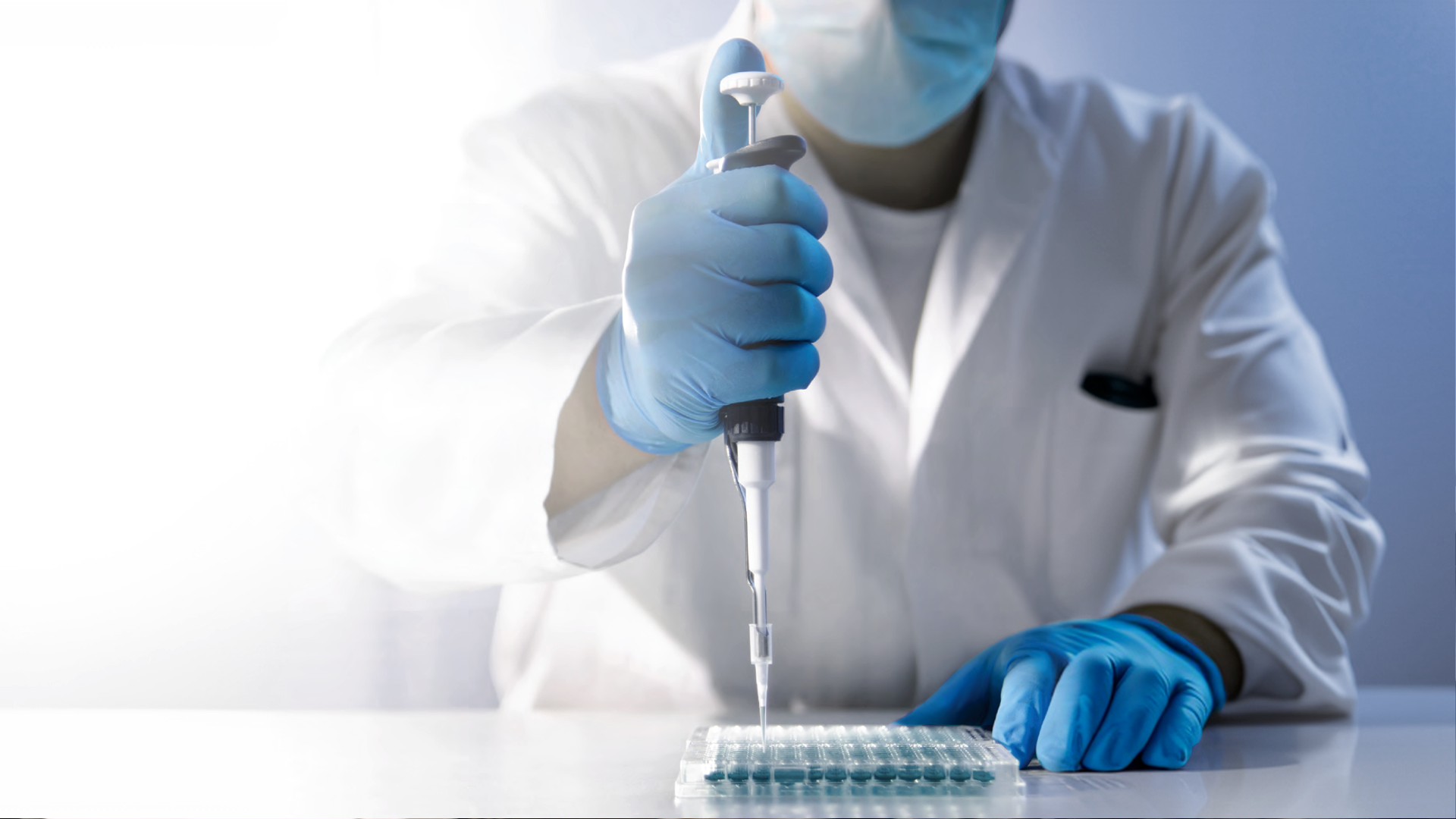
Approach: B2B marketing and sales playbook with a retainer
This is how the raw market of 1,707 food producers in the Netherlands was narrowed down to 322 accounts that fit the ideal customer profile. We use the playbook to create demand together, as one marketing and sales team, among the accounts that are a genuinely good match.
Today it is a group where more than 65,000 people work in over 950 laboratories and which achieved revenue of 7.3 billion euros in 2025. For the food division in the Benelux, that acquisition route has largely run its course. New growth therefore has to come from food producers that aren't customers yet and from customers that currently have only part of their analyses done by Eurofins.
The commercial side wasn't set up for that yet. Marketing and lead generation had little structure, and the list of ideal customers sales was working with dated from 2019. On top of that, the organisation was structured by lab discipline, whereas a customer thinks in terms of their own product and the risks that come with it.
In the preliminary conversations, the same picture kept coming back: everyone in the food sector knows the Eurofins name. Why a quality manager should call Eurofins in particular was a lot less clear. That was the question the playbook had to answer.

Before we build visibility in the market, it has to be clear which companies Eurofins invests its time and budget in. We didn't decide that from behind a desk. Beforehand, we spoke one-on-one with account managers about their customers, the conversations they have and the moments when they win or lose a customer. We took that input into a one-day workshop, with people from the labs, the consultancy branch and the inspection units of Eurofins around the table.
In that session, we sketched a maturity model together. A model like this classifies producers by their maturity in quality management and makes visible which type of producer Eurofins adds the most value for. We tested every characteristic in the model against customers from the existing portfolio, which the team itself put forward as examples of a good customer. This produced a sweet spot, the group of producers that marketing focuses on first. That group was then developed into an ideal customer profile (ICP), setting out for each characteristic what does and doesn't fit Eurofins.
A food producer rarely chooses a lab on its own. That is why the playbook sets out the Decision Making Unit (DMU), the group of people who influence that choice. In it, the quality manager is the initiator, who in practice often also makes the choice of lab partner. Purchasing focuses mainly on total cost and delivery reliability, while R&D and compliance have a say on methods and reporting.
With the profile on paper, we mapped out the market. Using company data filtered by SBI codes, we arrived at 1,707 Dutch food-producing companies. We first compared that raw list with a number of existing customers Eurofins itself identified as good customers, to validate whether the search profile really did produce the companies the commercial team would like to talk to.
Then came the enrichment. For each company, we used public data to check whether there is a recognised quality system, how complex the products are and whether raw materials are sourced globally. After those filters, 322 companies remained. Eurofins compares that list with its own customer database, making visible which accounts are already customers and where opportunities still lie. Finally, we identified the quality managers at these companies and looked at how long they have worked there. That allows Eurofins to time its sales activities even better, namely in the first period after a quality manager has started at a new company and may be looking around for a new lab partner.
To create a story that appeals to quality managers, we first need to know what is going on for them. So we first mapped out what quality managers in the food sector run into in their daily work. That input came from the interviews with account managers and from the workshop, where the team contributed examples from their own customer conversations. We grouped this into a number of themes that form the basis for content and sales conversations.
In the playbook, we described a Point of View: Eurofins' answer to the challenges in the market. This distinctive vision makes content stand out and stick. We also worked out (sub-)promises and supporting proof in a message house. That way, we can consistently prove that Eurofins offers a good solution to the quality manager's challenges.
The playbook deliberately contains no media plan or schedule. Those followed in the 100-day plan, which forms the basis for an ongoing marketing machine. Every activity in that plan is linked to the ideal customer profile, the persona and the content themes.
The ongoing foundation is findability. With Search 360, we map out where the quality manager searches for information about food safety, on Google and LinkedIn and in AI tools such as ChatGPT. That leads to SEO articles and LinkedIn posts every month, to improve online visibility.
In addition, we interview Eurofins' thought leaders every two months. From each conversation, we draw several LinkedIn posts per month, which we later also use as Thought Leader Ads within the 322 accounts.
An ABM campaign runs on the accounts with a recently appointed quality manager, in which marketing and sales work a selection of accounts together, in a cycle of eight to twelve weeks.
Weeks 1 and 2: warming up with thought leadership and paid visibility on the account list
Weeks 3 and 4: deepening with substantive content, after which sales steps in with context
Weeks 5 and 6: personal contact, while marketing retargets
Weeks 7 and 8: marketing delivers content that sales uses in conversations
Weeks 9 to 12: decision, follow-up and a win/loss analysis
We only use SEA once Search 360 has laid a foundation of findability. From then on, branded search runs continuously, supplemented by campaigns on keywords with clear buying intent. There will also be a dashboard with website recognition and LinkedIn data, showing which share of the 322 accounts we reach and who is showing interest. When an account becomes active, the account manager receives a signal, even if that company hasn't got in touch yet.
The first result of this approach is focus. Eurofins now works with an up-to-date list of 322 accounts that fit the ICP. The previous list dated from 2019. For a growing share of those accounts, it is known who the quality manager is and whether they started recently. The playbook gives marketing and sales a shared target list and a consistent, distinctive story for the market.
At Eurofins, it started with the question of which food companies are worth the effort and what the quality manager there needs in order to choose Eurofins. Is that question on the table in your organisation too? Then schedule a no-obligation conversation with Jeroen Valkenburg.

I help your brand get on your ideal customer's shortlist
Je kunt ook rechtstreeks mailen of bellen op +31 6 53 58 70 19
Loading form...