
Case
SUCCESVERHAAL
The Patient Safety Company
Content marketing
Content production
B2B
30 October 2026

Client: The Patient Safety Company
Market: Incident and quality management software for mid-sized healthcare organisations in English-speaking eastern Canada
Challenge: More demo requests from the right healthcare organisations, driven by one plan for marketing and sales
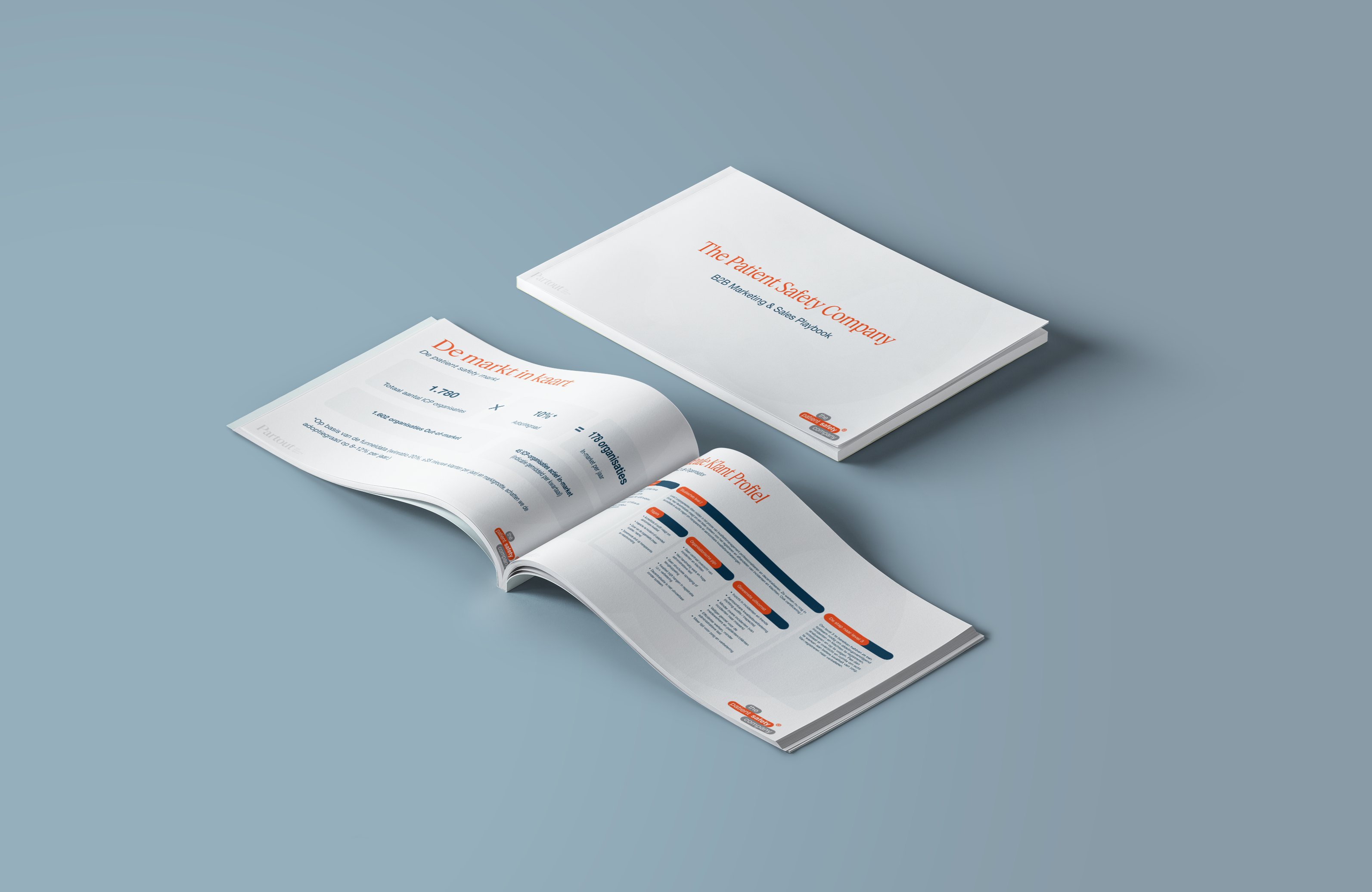
Approach: Two workshops and a B2B marketing and sales playbook with a 100-day roadmap, alongside a retainer for SEO, SEA and email
Before the start, Canada produced between 0 and 10 demo requests a month, with no recognisable pattern. After that, it took another 6 to 12 months for a demo to become a signed quote. With a sales cycle that long, this year's revenue largely comes from last year's pipeline.
Marketing and sales were both doing their jobs. When an organisation downloaded an e-book or requested a demo, it was followed up properly in HubSpot. What was missing were the signals that came before, such as repeat website visits or a healthcare organisation reading content again and again. As a result, sales only came into the picture once someone got in touch themselves, while by that point a healthcare organisation has already drawn up its shortlist.

The project started with two workshops with the TPSC team, the first on the ideal customer profile and the second on content. In the first session, we created a maturity model with four levels of healthcare organisations. That classification looks at how large an organisation is, how many incidents it handles per year, how it organises quality and what budget it has for quality software.
With that model, TPSC could choose one level where the software delivers the most. A choice like that initially feels like leaving market on the table. Yet this choice is what makes the rest of the playbook possible, because a quality manager in a GP practice has a different problem from a quality team in a hospital. With one message for both, neither recognises themselves in it.
The chosen level became the ideal customer profile (ICP), with characteristics you can check per organisation, such as the number of FTEs and the type of care.
Using the customer profile as a filter, we made a list of all healthcare organisations in eastern Canada that fit it. There are 1,780 of them. Based on TPSC's funnel data and the size of the market, we estimate that around 10% of them enter the market each year, which comes down to some 178 organisations a year actively looking for the software TPSC offers.
For marketing, that number means there are two groups to serve. If you only serve this year's 178 buyers, you leave behind 1,602 organisations that aren't searching now but will later. That group needs to know TPSC before they start comparing.
So the playbook targets both. Google Ads and landing pages capture existing demand. Meanwhile, LinkedIn posts by TPSC experts and the newsletter build preference among the rest of the market.
The customer profile comes with a buyer persona of the quality manager, the person in healthcare organisations who sets the search for software in motion. For that persona, we worked out what makes her work urgent, what frustrates her about the current way of working and what holds her back from switching to new software. It also sets out what does convince her. That last question in particular determines which proof TPSC shows in content and sales conversations.
The quality manager never decides on her own. That is why we also mapped out the decision-making unit (DMU), the group of people who have a say in a purchase. Each role has its own question. IT and the board, for example, look at very different things from the quality manager herself.
We also mapped out the decision path, from the moment the problem starts to be felt. For each phase, it shows who is involved, where the process gets stuck and what TPSC can do to lower the threshold.
Using the customer profile and the persona, we summarised the quality manager's biggest problems in a few key challenges. From these came a Point of View, the position with which TPSC sets itself apart in the market. That position describes what, according to TPSC, is wrong with how healthcare organisations currently work with quality and which direction is better.
Beneath that position sits a message house. That is the overview of the promise to the customer, with a number of pillars below it and the proof for each pillar. For TPSC, that proof carries a lot of weight, because healthcare organisations rely mainly on the experiences of peers. With the message house, sales and marketing use the same arguments, on the website and in a demo.
The second workshop was about content. There, we translated the position into what TPSC publishes. For each key challenge and each phase of the buying process, the playbook sets out which message fits and which format goes with it. In the research phase, it is about blogs and LinkedIn posts that name the problem, while later in the process webinars, templates, cases and landing pages come into play.
We also came up with a repeatable content format that starts from the experiences of healthcare professionals rather than from the software. For the quality manager, the biggest hurdle lies in the internal buying process. So the playbook also includes content that helps her gain support from IT and the board, such as a business case and answers to questions about security and implementation.
The playbook comes with a 100-day roadmap, with a goal for each phase and what is needed from TPSC itself. We drew up that roadmap in April, at the same time as delivering the playbook. That way, it is clear to the TPSC team and to us which decision is made at which moment.
Kick-off and baseline measurement (weeks 1 and 2). Set priorities and ownership, and compare the running campaigns with the playbook.
Improve demand capture (weeks 3 to 5). Sharpen Google Ads copy around the key challenges, improve the homepage and demo page, and set up an on-demand video demo.
Nurture and thought leadership (weeks 6 to 8). A nurture flow from download to demo and the first LinkedIn posts from a TPSC expert.
Evaluate and plan ahead (weeks 12 to 14). Decide together what to scale up, adjust or stop.
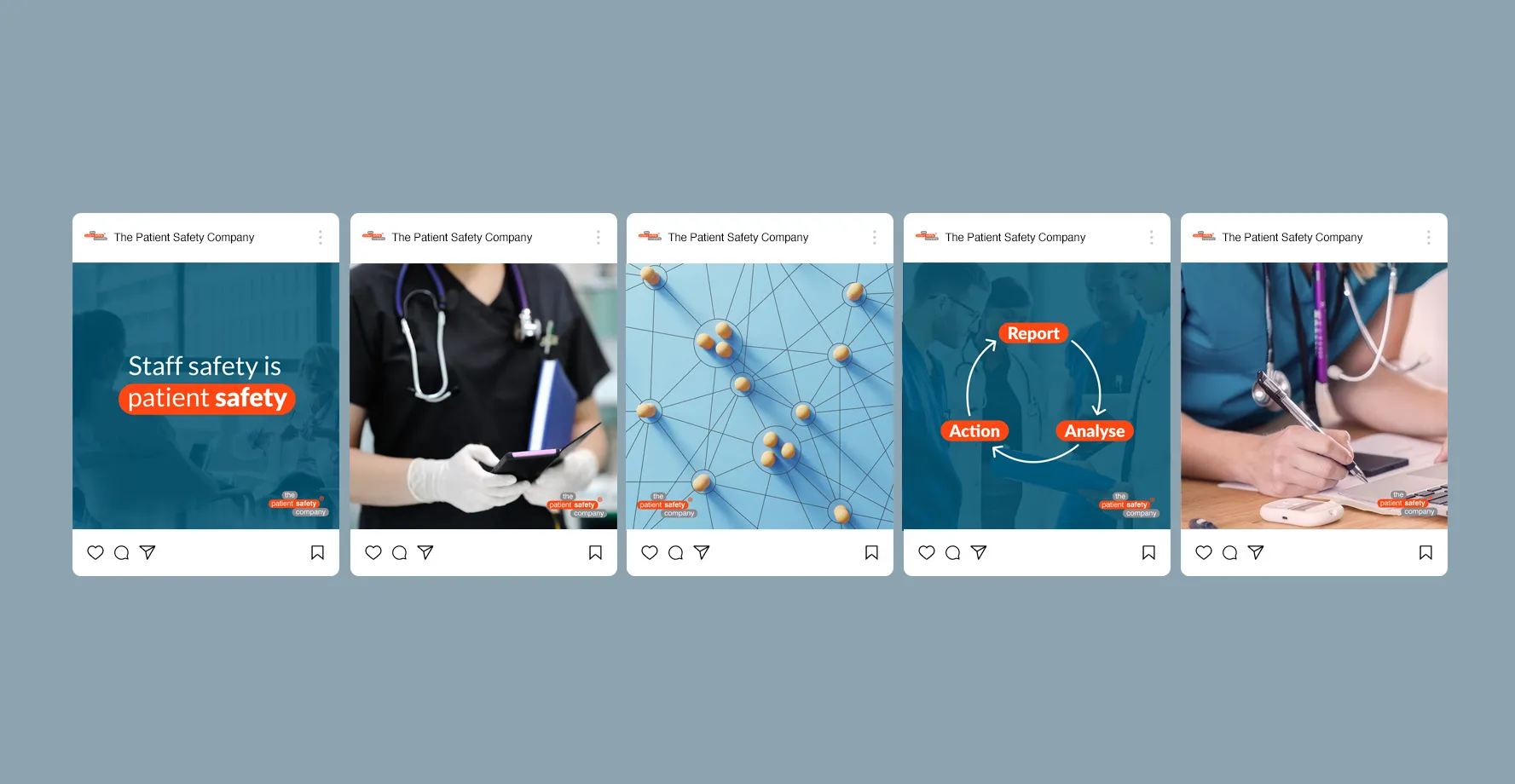
Because of the long sales cycle, the results of a playbook only show up in the pipeline after months. Ten new SEO pages about incident reporting are now live, a topic quality managers search for in the research phase. In June, traffic on research-phase topics was still below last year's level. Those pages should change that over the coming months. The number of demo requests did already rise slightly in June. Whether those demos also come more often from organisations within the customer profile will become clear in the coming quarters.
If your company also sells software to organisations with long decision-making processes, you will probably recognise the pattern at TPSC. Several choices from this project also work outside healthcare, for example for software for the manufacturing industry or business services. The details differ per market, the questions stay the same.
Choose one level of maturity. An organisation that is just starting out needs a different message from an organisation replacing existing software.
Calculate your market. With a target list and an estimate of the number of buyers per year, you know how much to invest in creating demand and how much in capturing it.
Also write for the people behind the buyer. Those who have a say decide whether your contact can get her choice approved internally.
Start with recognisable stories from your customer's day-to-day work. They say more to a buyer than a list of features.
In Canada, The Patient Safety Company now works from a clearly defined market of 1,780 healthcare organisations, with one customer profile and one position that recurs in all content. That also makes the goal for 2027 concrete enough to adjust course every quarter. In our blog about what our B2B playbook can do for you, you can read how a project like this unfolds.
Do you also sell a product with a long buying process and several decision-makers? Then we would be happy to look at what a playbook like this could look like for your market. Schedule a no-obligation conversation with Jeroen Valkenburg.

I help your brand get on your ideal customer's shortlist
Je kunt ook rechtstreeks mailen of bellen op +31 6 53 58 70 19
Loading form...