Blog
Blog
Creating images and videos with AI? Here's how you do it!

Robert Brans
Digital designer
Published
30 October 2026
Reading time
7 min read
AI tools for content creation? We're all for it. With the right approach, you can produce campaign material quickly and affordably. If you know how the tools work, you can save a lot of time and money. We show you how to use AI for images and videos that really work.
Generative AI for images
Creating campaign images? Until now you had two options: a photo shoot or stock photography. Both have drawbacks. A photo shoot costs time, money and planning, although you do get unique images that fit your brand perfectly. Stock photography is faster and cheaper, but often recognisably generic. On top of that, you usually still need to edit it to make it fit your campaign.
Now there is a third option. With AI, you can have images created from text instructions. We call this form of content creation Generative AI. Generative AI is software that, through training, has learned to create new content by itself according to certain patterns.
Generative AI for images?! How does that work?
There are various AI systems. You probably know ChatGPT - a system that writes text based on your instructions. But there are also systems that write code, create audio, generate images or produce videos.
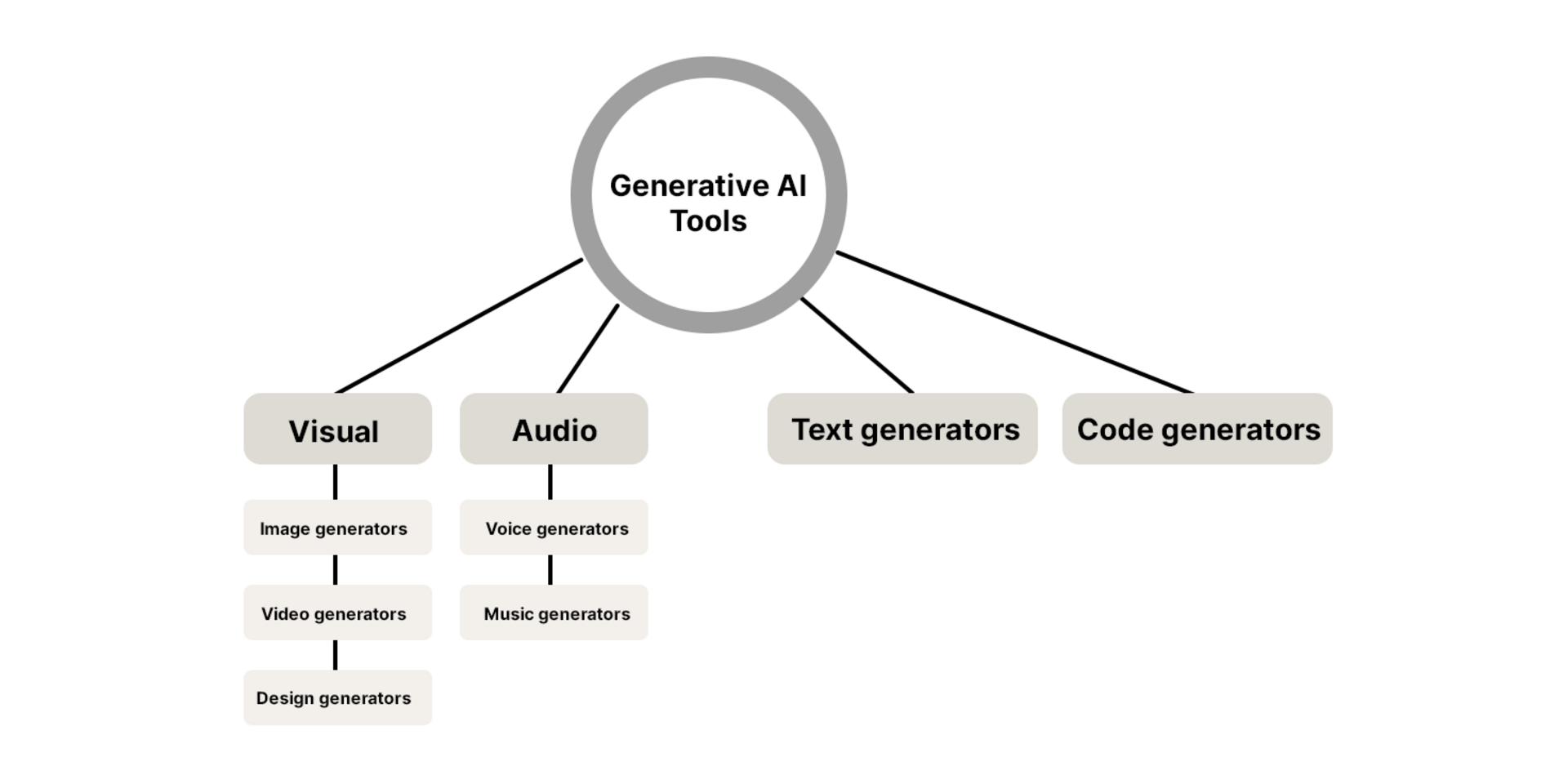
The principle stays the same: with a text instruction, known as a prompt, you tell the AI tool what to make. The tool then generates an image based on your description. For images, you can use Dall-E, Dream, Craiyon or Midjourney.
Which tool?
Which tool works best? There's no clear-cut answer. The AI landscape is evolving fast, so what's best today may be different tomorrow. Dall-E comes from OpenAI (the makers of ChatGPT) and is the best known. We prefer Midjourney because it delivers better image quality and works faster.
AI-generated images in practice
We use AI images regularly. Especially in the early stages of projects, they work well for visualising concepts. The output doesn't need to be perfect then, because AI generators still sometimes make mistakes with hands, faces and proportions.
Recently we created a campaign for a solar panel installer in which Midjourney supplied the key visual. Shooting it ourselves was too expensive and too slow. Stock photography didn't work because the installers' clothing had to meet specific requirements. Below, we show how we used Midjourney to get the right images.
How we worked in Midjourney
The hardest part is coming up with the right text prompt. You need to describe as precisely as possible what should be in the image. An example of our first attempt:
"3 workmen solar panel installer with yellow working helmet and reflecting safety vest, full body shot in front of solar panels, award winning photography 8K, depth of field, hyper detailed, hyper realistic"
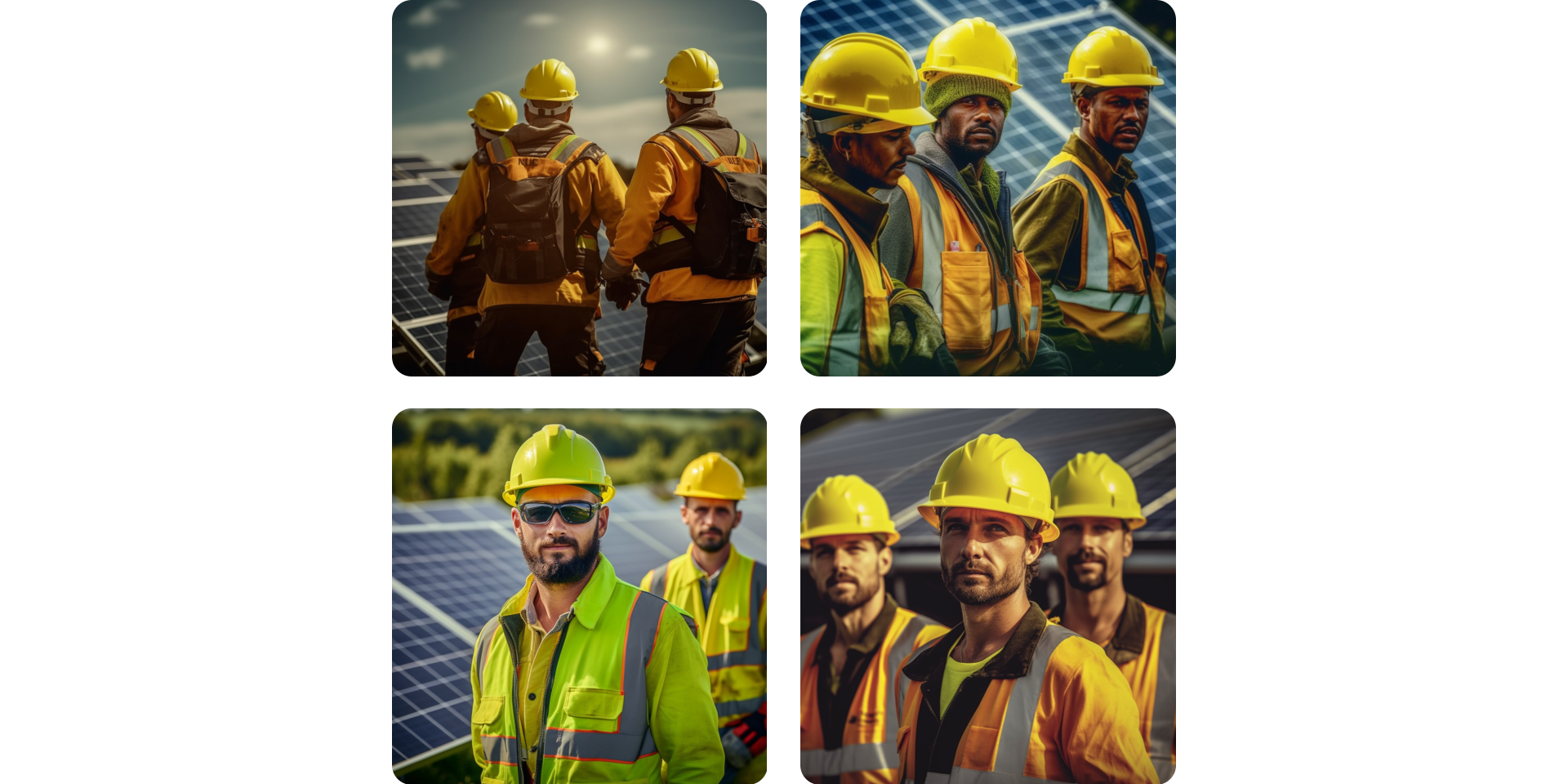
The first image showed the men from behind. The second showed men wearing beanies under their helmets (not in line with regulations). The third showed only two men, and in the fourth the three men looked alike.
After adjusting the prompt, we got better results:
"3 technicians, stockphoto, in front of solar panels, outside, caucasian men, looking at camera, full body shot, wearing safety vests --no watermarks --ar 3:2"
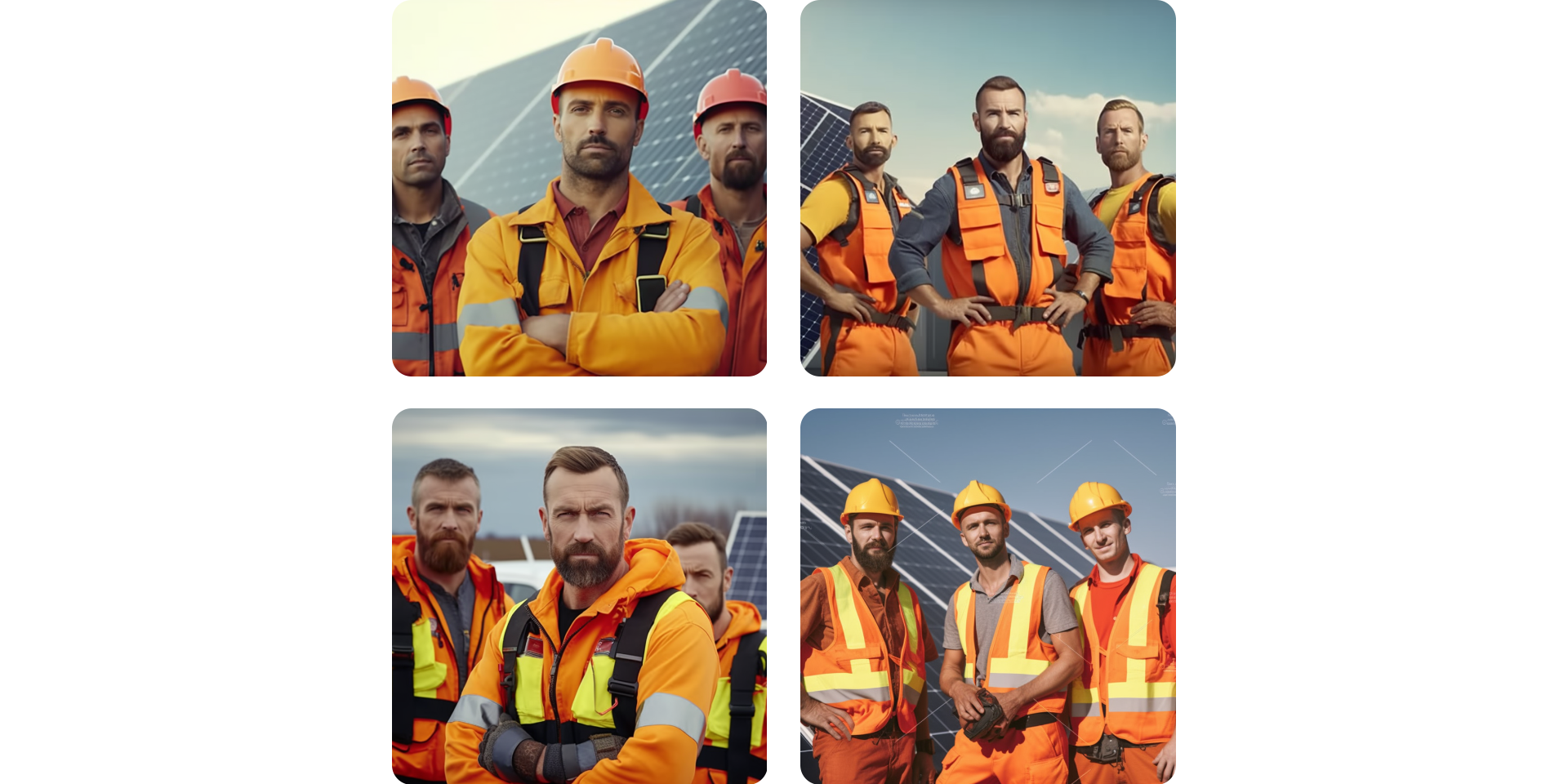
These images came closer to what we were looking for, but lacked diversity. The three men looked too much alike.
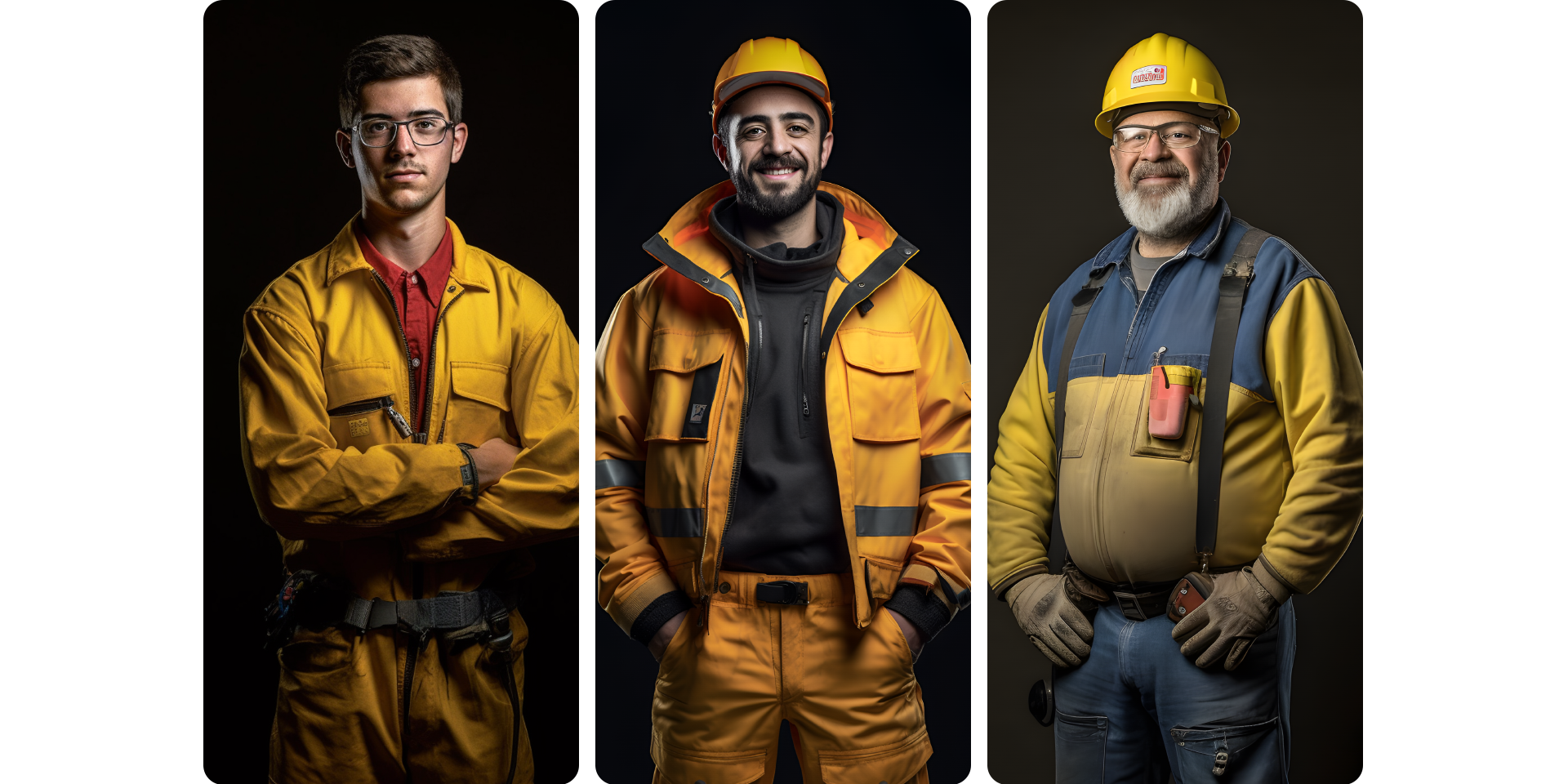
Because distinct characters were important, we had Midjourney create three separate images of different people. We then merged them into a single image. With some editing in Photoshop, the final key visual for the campaign was born.
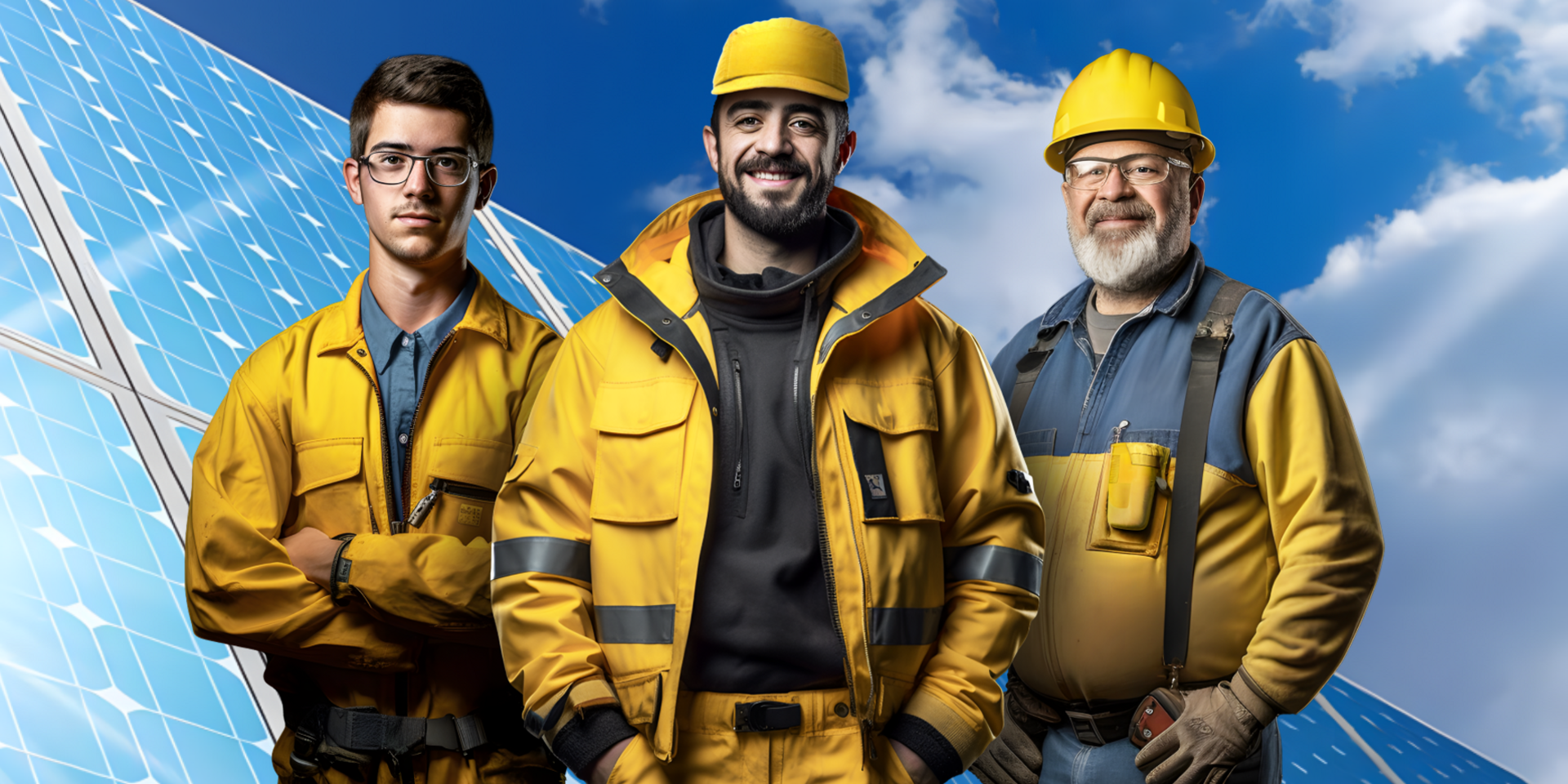
Thanks to AI, we created an image in a short time that would have been far more expensive and time-consuming with a photo shoot. With stock photography, we would probably never have found anything that matched our specific requirements so well.
Generative AI: fan or not?
We're positive about AI tools for images. Whether they're a good fit still depends on the client. Sometimes a photo shoot or stock image is still the best choice, but AI is definitely an option for strong campaign visuals.
Generative AI for video
Making good videos is a craft. Writing a script, editing footage and working out every detail takes time and expertise. AI for video creation makes video production more accessible. We share what we know about AI tools for video.
Opus Clip AI
Opus Clip AI analyses long videos and turns them into shorter clips for YouTube Shorts, Instagram posts, Facebook and other channels.
You upload your footage. Opus Clip cuts your long videos into short clips and makes sure every clip has an intro. These intros hook viewers in the first few seconds, so they watch the whole video. It removes unsuitable parts, rearranges clips where needed and makes sure the short video hangs together. Every video ends with a strong call to action. Opus Clip AI delivers videos you can use straight away in your marketing.
The benefits of Opus Clip
We're fans of Opus Clip. Why? Opus Clip has features that set it apart from other video editing software:
- AI Curation (ClipGenius™): Opus Clip's AI analyses your video to find the most compelling hooks, pulls relevant highlights from different parts and rearranges them into coherent short videos.
- AI Virality Score™: the AI automatically generates a score showing the viral potential of each short clip. The score is based on an analysis of thousands of videos that have gone viral.
- AI Face Tracking: the AI analyses moving faces and keeps the person's face in the centre of the video frame at all times.
- AI keyword highlighting: the AI analyses your video captions and highlights the most valuable keywords. Highlighted keywords increase video watch time by 65% on average.
- AI Emoji Generator: Opus Clip's AI analyses your video and automatically adds relevant emojis.
AI for video creation is still in its infancy, but it is developing at lightning speed. Opus AI isn't the only provider. Also take a look at RunWay, a tool that lets you experiment with AI-generated backgrounds.
Conclusion
From creating images with Midjourney to producing videos with Opus Clip or experimenting with RunWay, all sorts of things are possible. You can even develop your own language models and feed them with your data. AI is evolving fast. New tools appear every week and existing tools keep getting better.
The challenge for marketers and designers is to make the most of what AI can do without losing their creativity and critical eye. We can let AI help us, but the human element remains decisive in conceiving and developing strong campaigns.
Want to get started with AI together?
We love diving into AI tools to create the right campaign visual or video together with you. Get in touch and we'll explore the possibilities of AI together.
We are Partout
We are a B2B marketing agency in Eindhoven. We make sure B2B companies land on the shortlist of their ideal customers, especially in complex buying processes where others get stuck. We combine branding and demand generation so you become a brand in demand. Instead of just chasing leads, we build a brand that is seen, trusted and chosen.